Harvesting Flowers

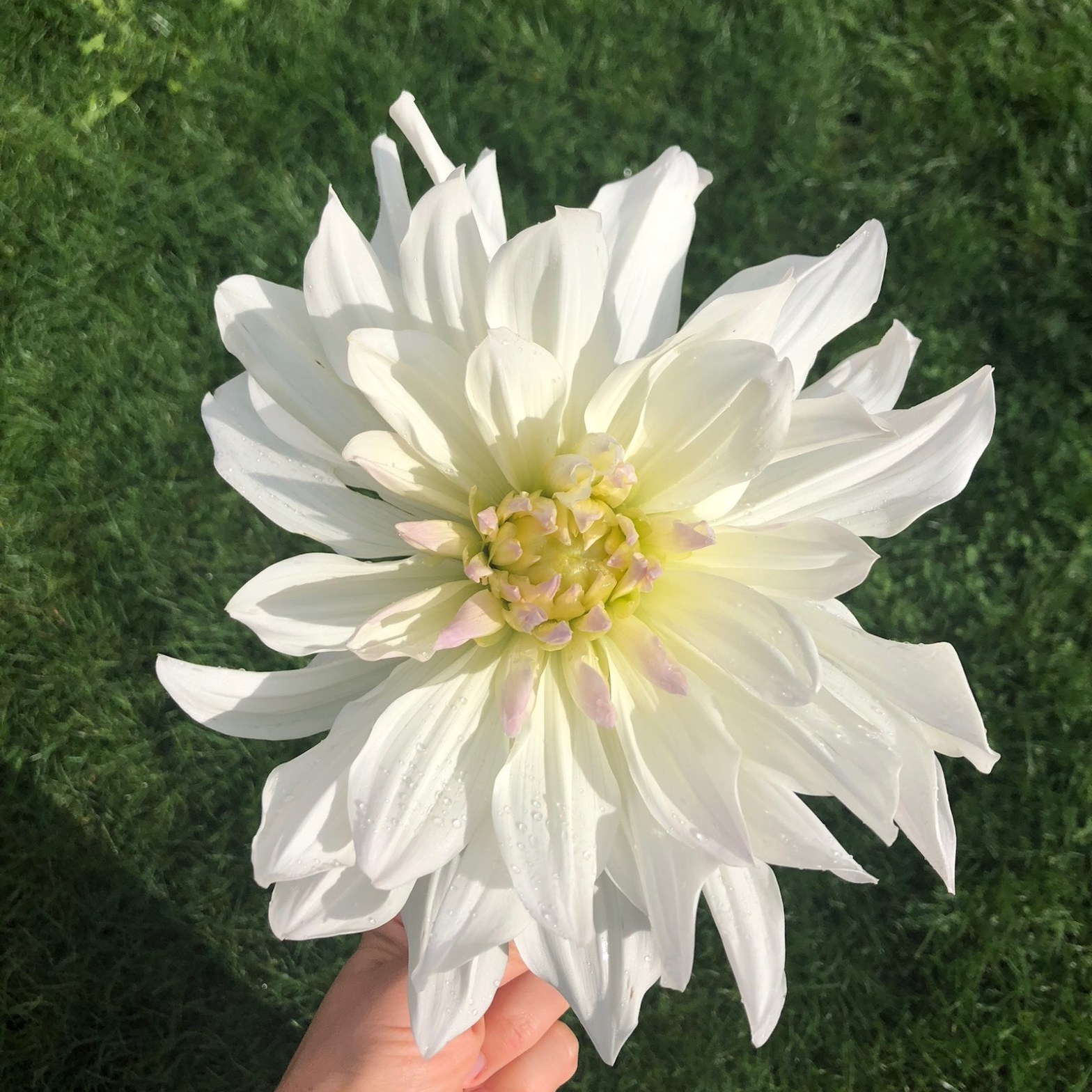
Dahlias are a wonderful and magical plant: if you want the plant to produce more flowers, you harvest the flowers. For every bloom you cut, two more pop up in its place.

Creative ideas work the same way. When we have ideas for projects, artworks, essays, novels, we’re often tempted to hold on to them, to save them for the perfect time. When we do this sort of “idea hoarding,” it puts a stopper on our creative flow.

However, when we pluck that idea from within our head and make it into something real, when we create our art and put it out into the world, no matter how imperfect or unfinished it is, the creative flow continues.

Ideas beget ideas, cut flowers beget more flowers to cut.

Happy harvest season!


Ego Voice/God Voice

When I make visual art, I get quiet enough to hear the voices in my head.

I hear the voice that says, “This is stupid, no one will like this,” or the voice that says, “This is pretty! People will love this!”

When I’m making art, I sometimes get impatient. I ask myself, “Why am I doing this? When will I ‘GET THERE!?!?'” (<— “There” being the place of making the brilliant art that will illicit worldwide adoration and spark the insights that will raise our collective consciousness and ultimately bring about world peace. It’s a modest aim, really.)

So, when making art, I get impatient. But, often at the point of impatience, I hear a deeper, wiser voice. A voice that surprises me.

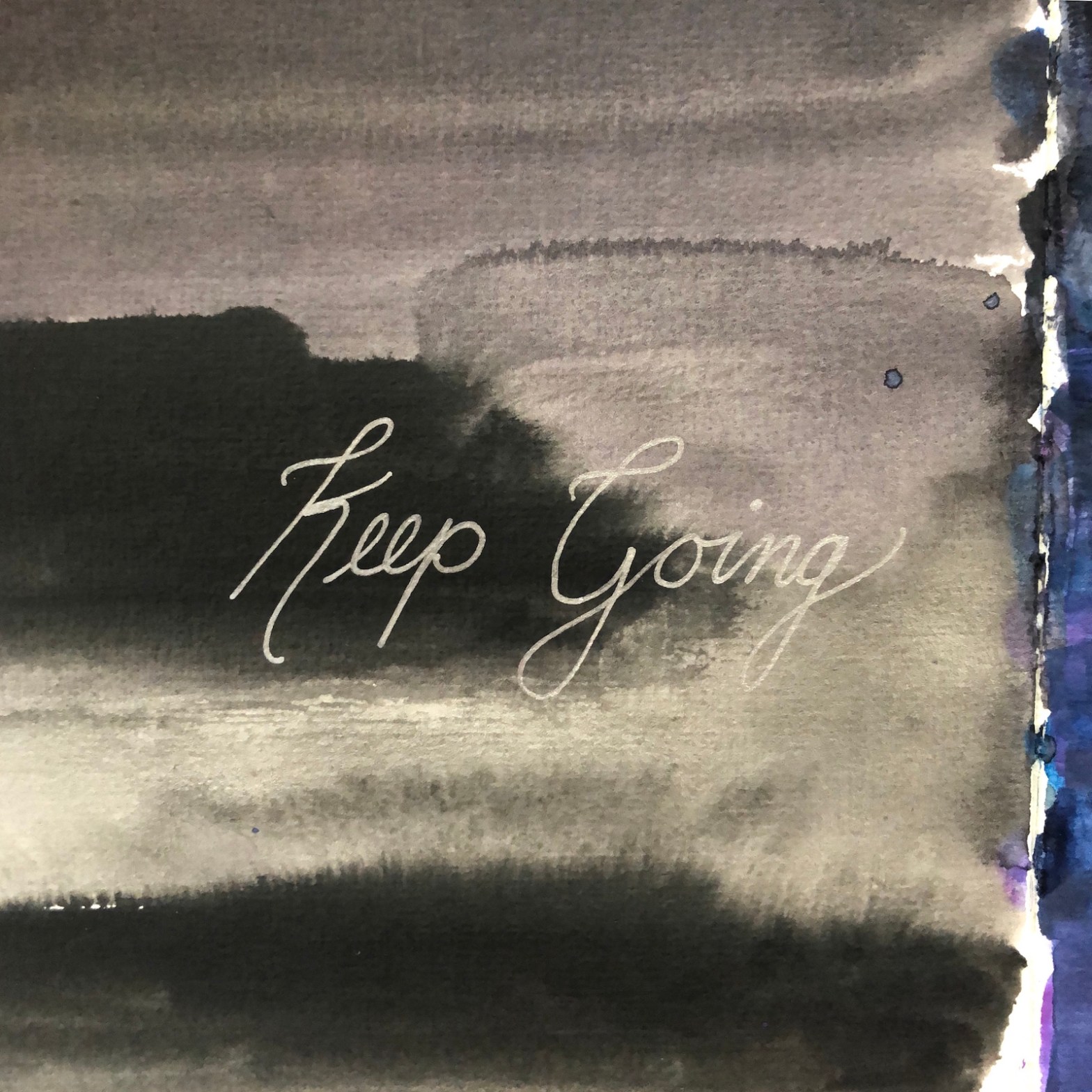
When I ask, “Why am I doing this?” this voice says, “That doesn’t matter. Keep going.”

“Keep going” is the mantra that comes from somewhere inside of me, a place I have no conscious control over.

How do I know when I’m hearing the “keep going” voice, or as I call it, the “God” voice? (Not necessarily as in the ultimate voice of the almighty, perhaps just the voice of God within me, my highest self.) How do I distinguish that voice from that voice that is trying to protect myself from ridicule, the fear, or “Ego” voice?

I keep practicing, keep listening, and notice patterns:

The “Ego” voice talks in value judgements: “This is stupid, this looks bad, why are you doing this?” or “This is great! Everyone will recognize your genius!” Noted. (Welllll, kind of noted. Truth be told, I’m susceptible to self-inflation and somewhat prone to bragging, so it takes me a little longer to realize the “I’m great!” voice is also the ego voice. Oh well. “Keep going,” right?)

The Ego voice also talks in “shoulds.” As in, “Maybe you should learn to use markers better before you share your marker drawings,” or “You should probably get a real job for a while and put this creativity stuff on the back burner until the kids are in school.”

Hm.

In contrast, the “God” voice often talks in “want.”

For example, one internal conversation that happened when I was painting went like this:

“I should probably take a painting class. I could spend a year getting better at painting and then actually make good art.” (<— Voice #1)

“I don’t want to take a painting class, it’s not time to ‘get better’ at anything. That feels like a lateral move.” (<— Voice #2)

Voice #1 (Ego voice) felt very familiar. The procrastinator voice, the voice of reason. What Voice #2 (God voice) said surprised me. Wasn’t I supposed to want to get better at stuff? Isn’t it kind of cocky to think that I was already “good enough” to make and share my art?

But I knew in my heart that Voice #2, God voice, was true. I didn’t want to take a class, that sounded tedious and uninspiring. I realized that I was at a point where I had learned as much technique as I needed. It was time to explore what I already knew, and to discover things that I didn’t know I knew. It was time to express myself with the tools and abilities I already had.

As I made art and practiced listening to and distinguishing my internal voices, I began to believe that this “God” voice was true. But it wasn’t an intellectual knowing– as I said, I knew it in my heart.

The God voice is often accompanied by a bodily feeling.

When my Ego voice is talking, it triggers a knitting of my brow, rolling eyes, a twisted mouth. The “thinking,” or “trying to figure out” face. A busy mind, disconnected from the body below.

When the God voice talks, it feels like an open heart, a face washed of tension in the presence of a deeper revelation. Kind of a light, surprised, “Huh!”

And, almost always, the emotion that the God voice inspires is relief. As in, “Ahhhh, I don’t have to make this so hard and complicated. I just get to keep going, keep discovering, keep listening, keep practicing, keep playing.”

Keep doing what I love doing,

keep making what I love making,

keep being who I love being.
Art for Art’s Sake

Last fall, I started something I called “Creativity Practice,” I made a practice of doing one creative thing a day and posting it on Instagram.

Over the course of the practice, I began to ask myself, ‘Why am I making this project?’ The answers were sometimes like this:

I’m making this:

• because so&so will like it.

• so more people will follow me.

• because it piggybacks onto so&so’s very popular idea.

• because I have a great hashtag for it.

• because it celebrates a holiday that people will be posting about.


All of these reasons were based on what others would think of my post.

That is fine; considering the audience is an important part of writing/creating for an audience. However, at a certain point in my practice I wasn’t trying to please an audience. I was trying to uncover truth.

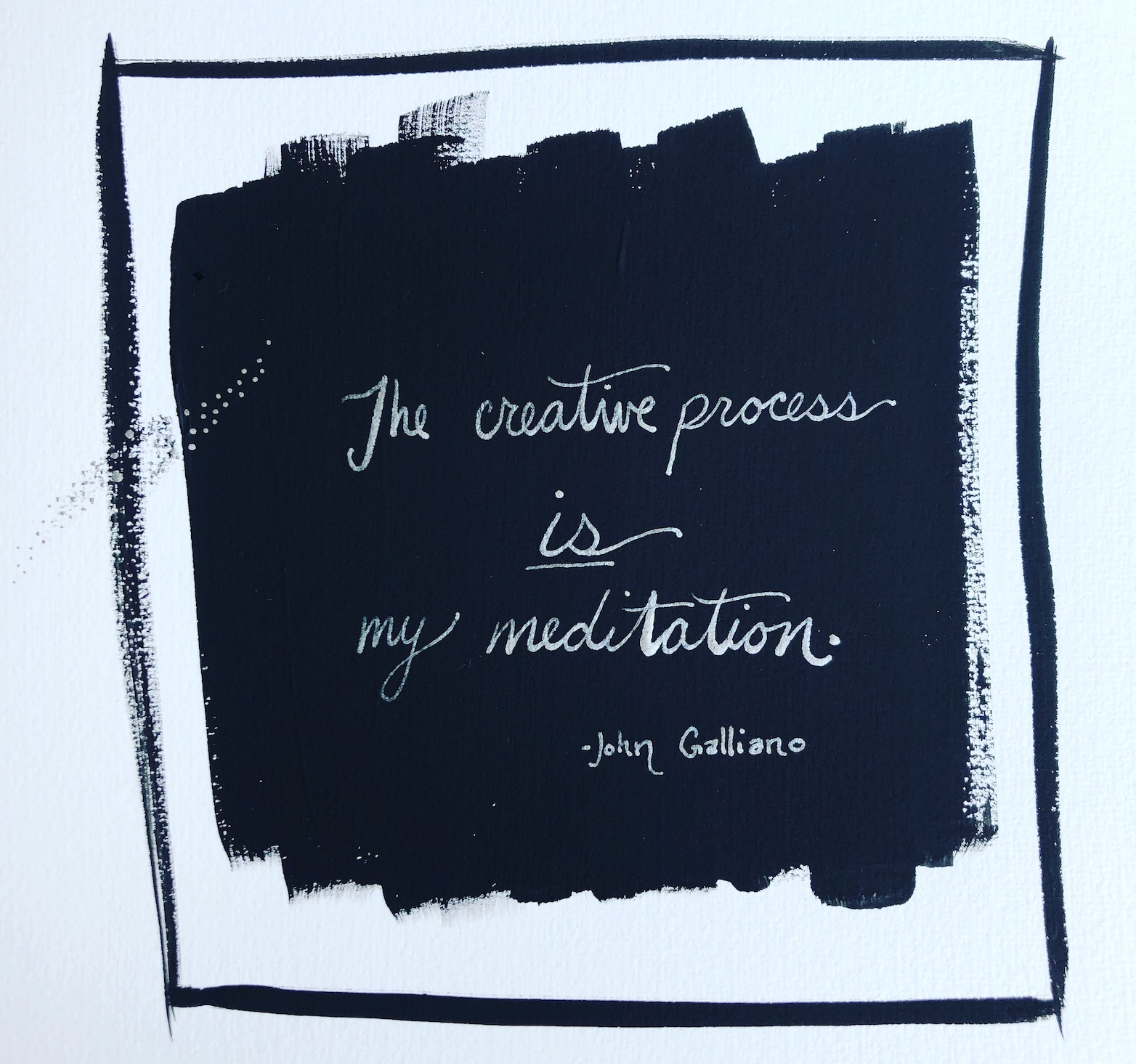
That’s where art for its own sake comes in. When I make art for art’s sake, I make it for only myself. And when I get into the meditative state of creation, the state of making art for my own desire, or fun, or need, or self-expression, I ignore the “inner critic.” And when I am able ignore that inner critic*, I can get to a place of truth.

The truth in that quiet place might be simple or mundane, realizations like, “Oh! My cupboards will make so much more sense if all the snacks are in one place!” or, “Oh, I’m getting mad that so&so is so angry, but really, I’M SO ANGRY!” or, “I don’t WANT to get better at figure drawing, I don’t care about realism that much.”

Or, the truth could be deep truth. Occasionally, through pure, creative expression, I  resolve into the divine, creative center of myself. My body, mind, and spirit’s core balance point. Or circle, or sphere. Or maybe it’s a vertical line, like Barnett Newman’s “zips” or the vertical path of kundalini energy. Mostly it’s a feeling, a beautiful, unattached but deeply connected warm feeling, a peaceful, glowing calm.

Whether or not I get to that central equilibrium in any one particular sitting doesn’t much matter. Plus, the second I get attached to “getting to” central equilibrium, it’s un-get-to-able.

The point is movement. Creating art for art’s sake fosters movement, the ink on the paper, the brush in the water, the moving flow of ideas and colors, hand and eye, thoughts and breath. Instead of stagnation, blocks, bottlenecks, paralysis– all troublesome for artists, I get movement. The movement could be up or down, in or out, forward or back, the direction might not matter either…

Movement in any direction is the creation of something that hasn’t existed before. And, as artists, isn’t that what we are here to do?


*(Sometimes I am not able to ignore the inner critic. I do my best to accept that and keep going.)

Write What You (Don’t) Know

Those of us who write have heard the phrase, “Write what you know.”

But what do I write about once I realize I know nothing?

A karate teacher of mine told our class once, “We don’t say we know karate.” She went on to explain what this meant. As I understood it, one can never fully ‘know’ karate, it’s a vast system. The moment we tell ourselves we know it, we’re both puffing ourselves up and limiting our ability to learn more. Rather, we say we “study” karate, or “train in” karate. This notion of “not knowing” has stuck with me for the last fifteen years.

I think this “not knowing” can be applied to anything. The moment we say we “know” something, we find someone else who knows the same thing, but has an entirely different understanding. We can learn things, have an understanding of them, but “knowing” them assumes we possess access to the full, unquestionable truth of a thing. I don’t think we do. I know I don’t. (Actually, I don’t know I know I don’t!)

Plus, aren’t we all filtering whatever knowledge we have through the lens of our specific life experience anyway? And how can one tiny person’s life experience encompass a word so big and finite as “know?”

So, if I know nothing, what do I write about?

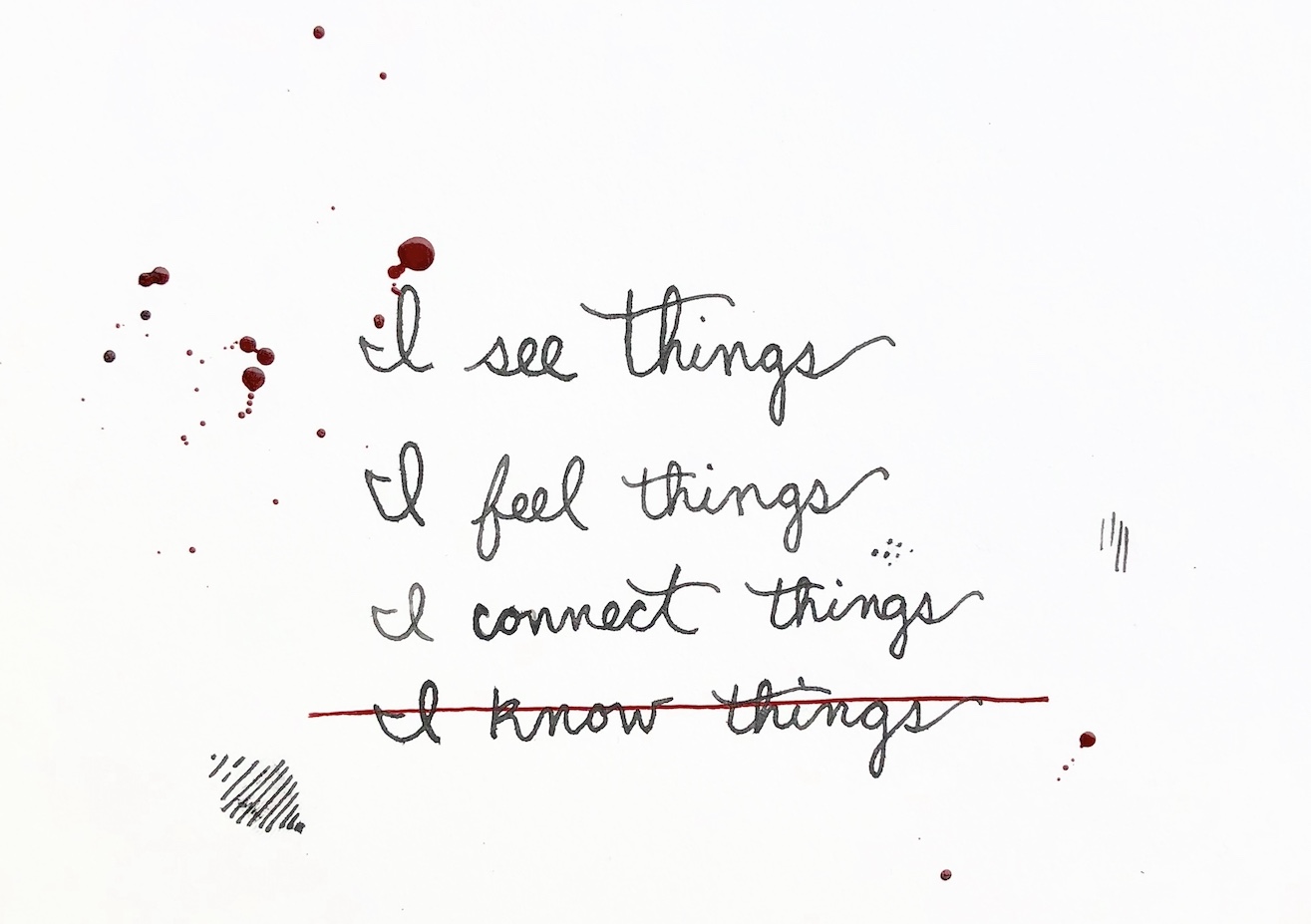
Instead of writing what I “know,” I land on writing what I “experience.” Things I’ve seen, things I’ve felt, connections I sense. Things I’ve learned that I want to explore. Whimsical things or inventions that seem like they want to be shared.

(At any point I can replace the verb “write” with “draw,” “paint,” “dance,” “sing,” “be.”)

While what I’ve learned, my education, my acquired “knowledge” is important and informs my self-expression, the knowledge itself isn’t the essence of that expression. My aim is to “write,” “dance,” “be”– express in all of those ways from the truth of my own experience, my own “be-ing.” In this sense, I don’t have to create from the kind of freaked out, authoritative place of having to “know something.”

How refreshing!