Summer brings so much inspiration–warm weather, sunshine, flowers blooming in the garden, long, slow days. Lately I feel inspired to make art, and I’m making art, but it doesn’t necessarily feel cohesive or like a collection in any way. And yet, I think perhaps the fact that its my art is cohesion enough. I’ve been reluctant to share art lately because it doesn’t seem to have much direction, but I’m getting over that right now and will share what I’ve been making anyway.
The art I’ve been making lately includes:
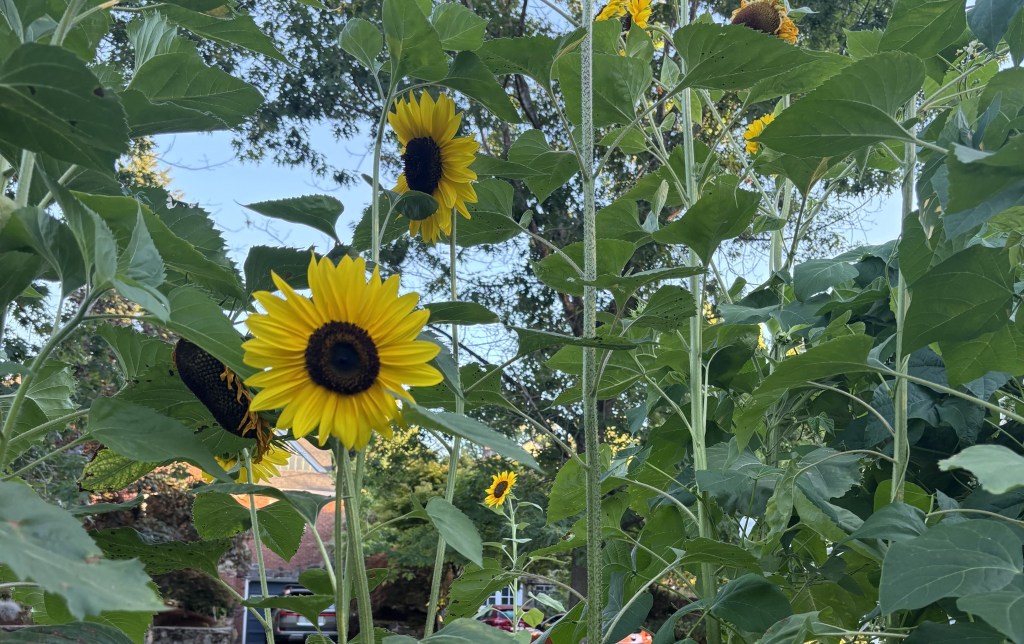
Flower arrangements made from what grows in my garden:
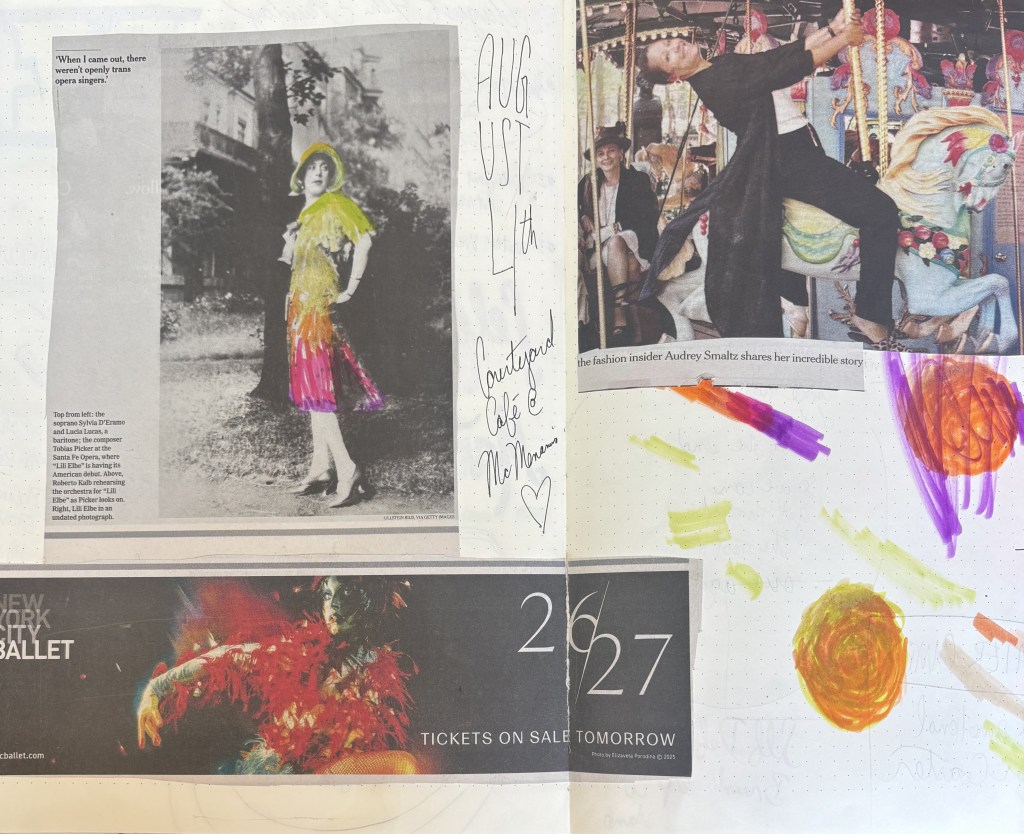
Collages made with newspapers and magazines:
Sticker art, like the sticker collage on my journal:
Dressing up in fun outfits with makeup:
Movement art, often with big sticks:
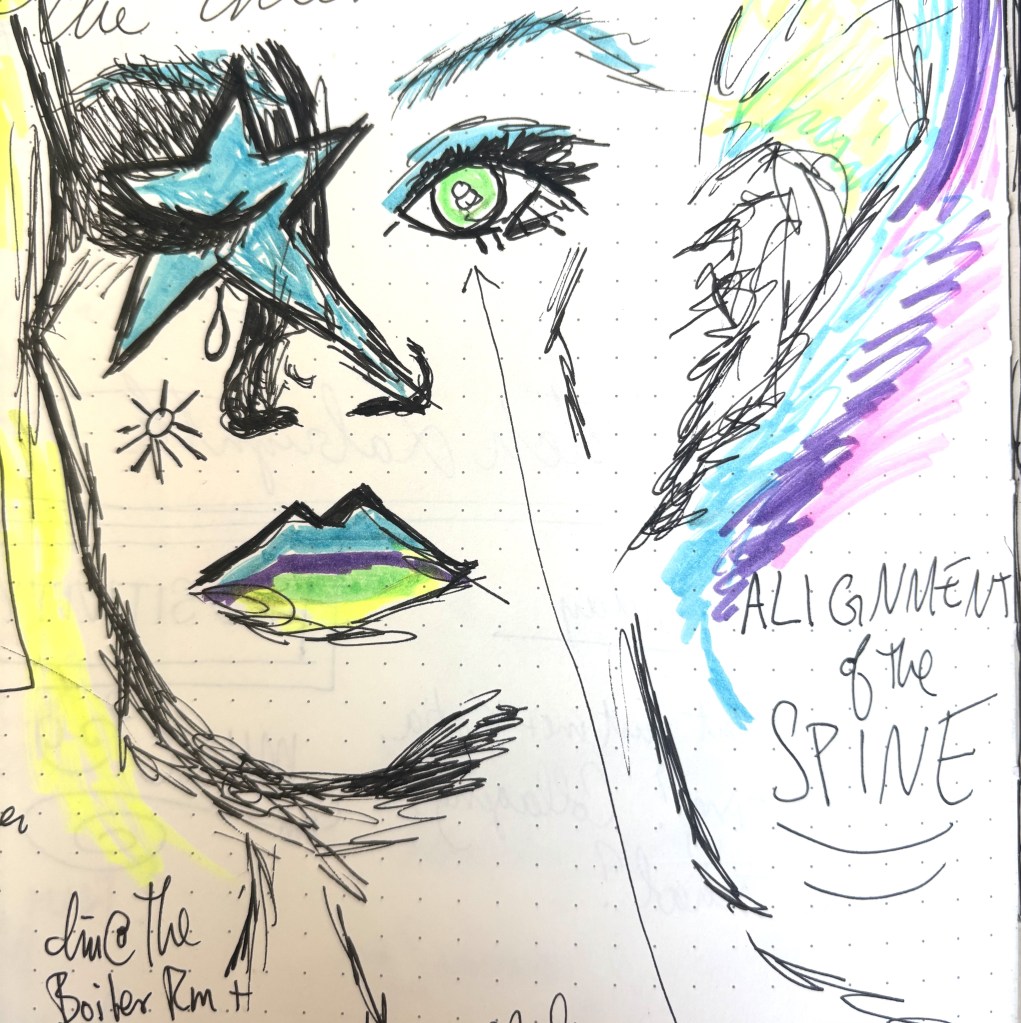
Drawing from life and imagination:
Painting pottery with my kid:
And so much more! As I put these photos up I see some cohesion: playfulness, colorfulness, whimsy, joy & intensity. Little pieces of me via the art I make. Thank you for looking with me!
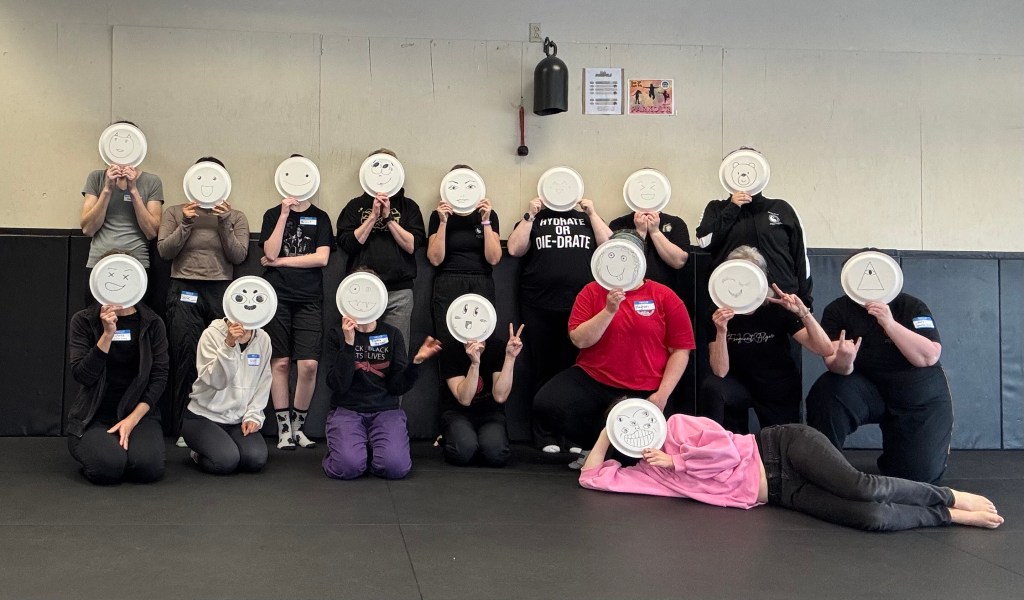
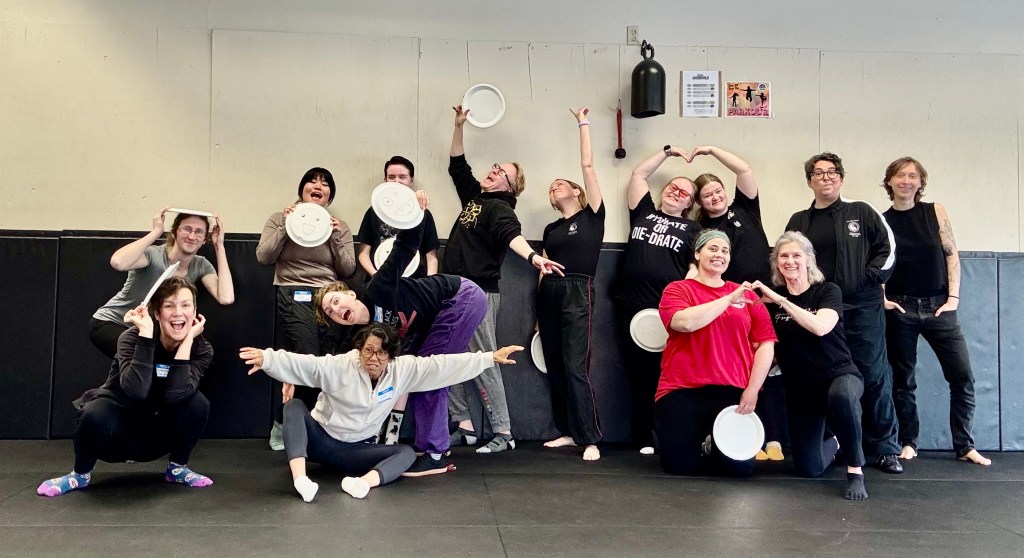
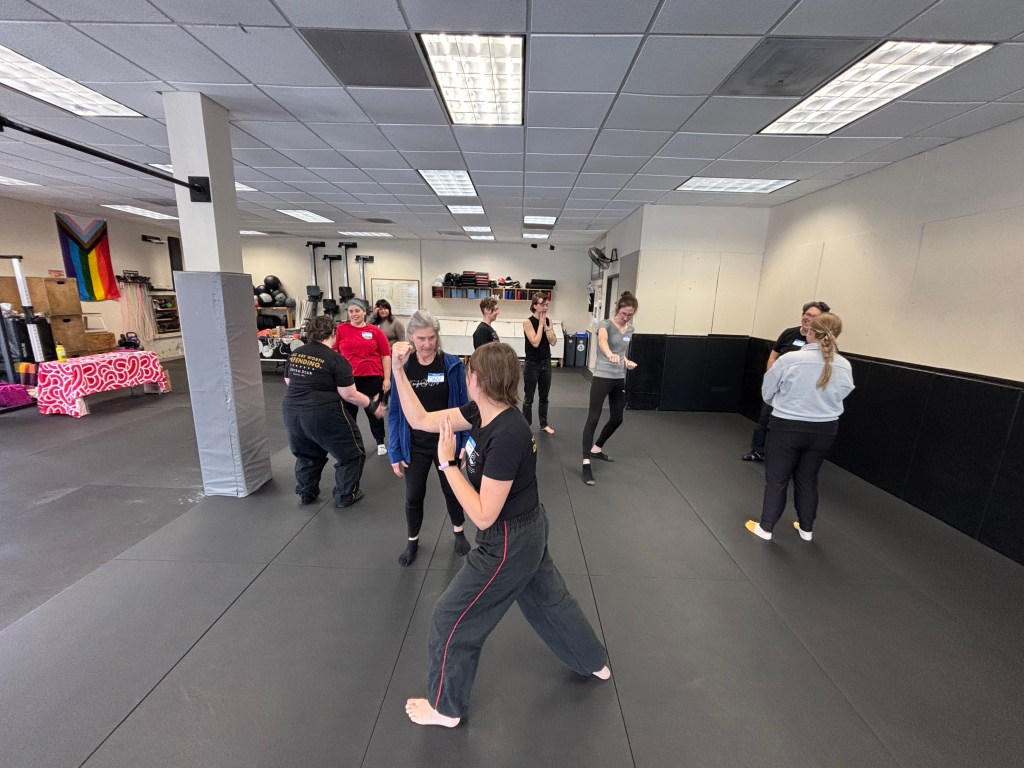
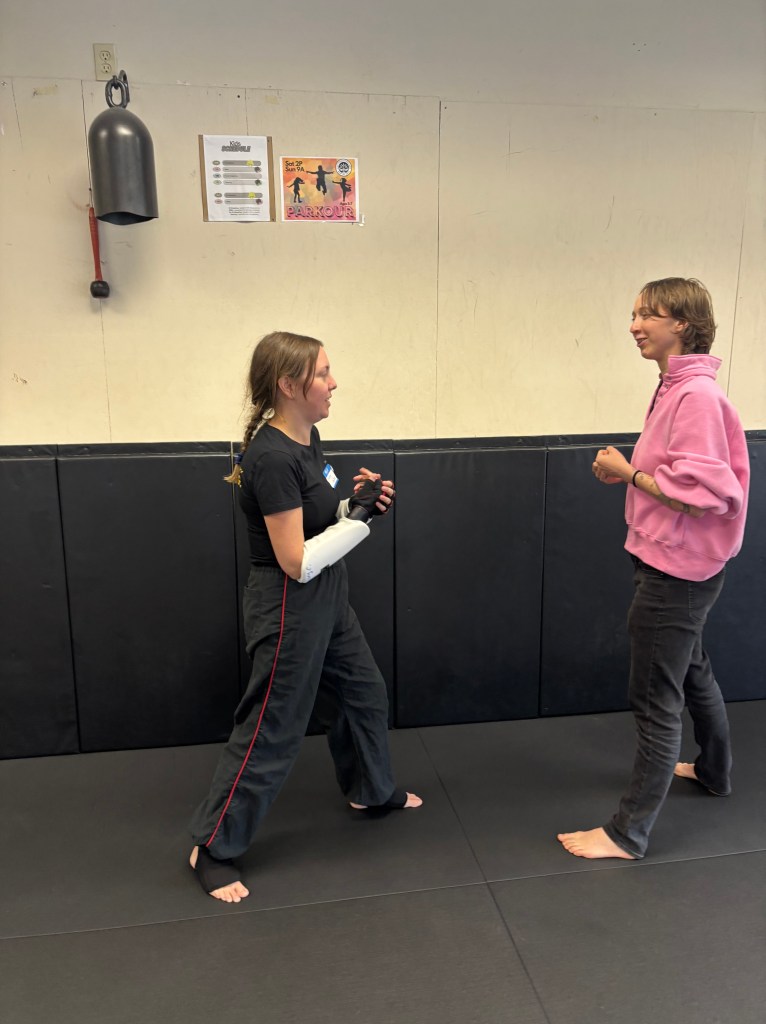
On May 16th we held the fourth in our series of Fun Fighting events. What a great day we had! This is the first time we’ve held our event since we changed the name from Femm Fighting. The name change is proving to be a positive one– some participants expressed that they didn’t connect with the term “femm” but felt comfortable coming now that the name was non-gendered. Progress, hooray!
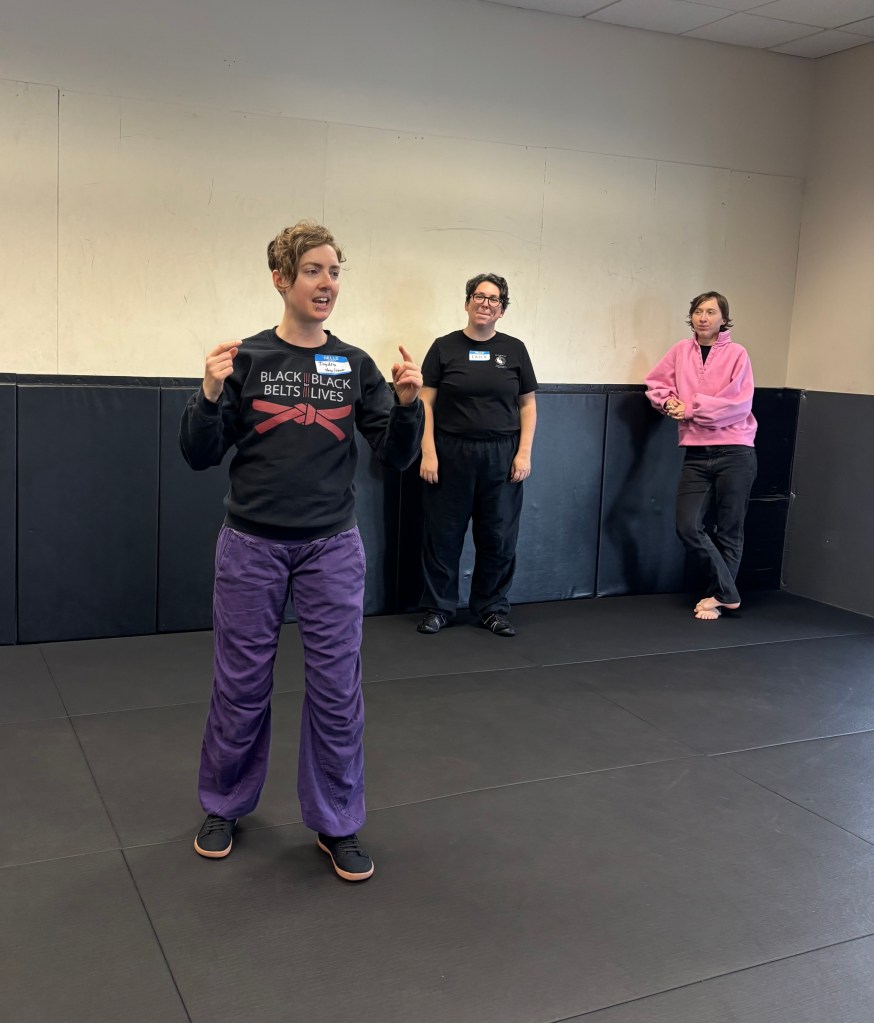
I led a class about connecting our energy to the earth. Going really slowly was part of the class, and I was delighted to see that everyone was able to slow down and start to feel how their body and energy could connect to the earth below. Slow, steady, connected movement is a beautiful thing, and in a group it creates a calm awareness of each other and the space around us. I was grateful to teach to a group that so willingly let their energy slow down and deepen.
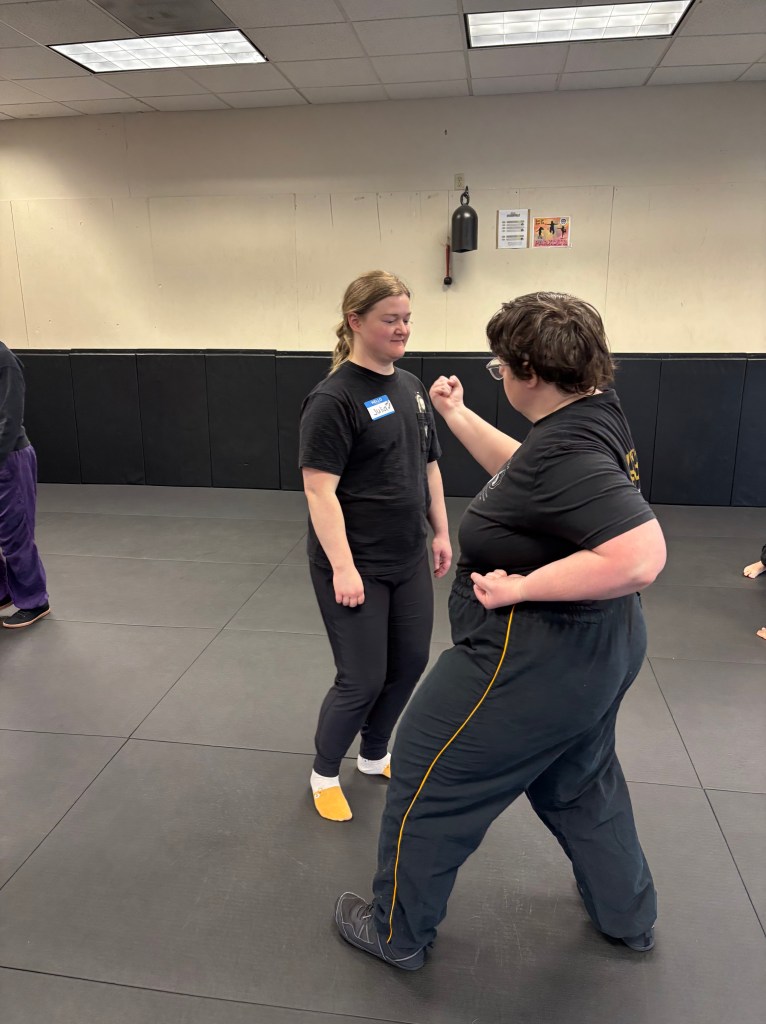
Jaydra led a class in which we infused consent into our training. We asked our partners for permission to touch them before every step in the exercises. In many martial arts schools, a student is supposed to subject themselves fully to whatever contact level the teacher suggests. This can sometimes result in people taking and giving more contact than is appropriate, and can result in increased fear or even injury. But in Jaydra’s class, we practiced communicating to our partner exactly what level of contact was good for us. Expressing our boundaries is key to self-defense, and helps keep us safe in our day-to-day lives.
Our discussion was about how in martial arts we practice violence to promote peace, and how there’s an inherent tension in that. Some notes from that discussion:
• What is safety? Psycological safety, internal safety, mental safety.
• How do we harness violence in ourselves? Appropriate outlets like sparring, weight training
• What is the opposite of violence? Safety, peace, non-chaos.
• More community = more feelings of safety
• In a violent world, the focus of our martial practice can offer a break from the chaos
• Our practice of violence can cultivate an experience of peace
After our discussion some of us stuck around for open practice. We sparred, grappled, practiced push hands, and chatted. Afterwards some of us went for food cart dinner and more social time.
A big thank you to everyone who participated in Fun Fighting. A big shout-out especially to people who came for the first time, and to our Seven Star friends who came down from Seattle. We hope to see you again in the Fall!
This Winter has been a time for inner retreat and recalibration. I’m getting over a difficult series of events in my martial arts life. Three really hard things happened in the past two years, and processing them has taken a lot of energy. The hard things were:
I had a difficult break with my teacher Master Shanti in June of 2024. She did something that betrayed my trust, and when I told her that her actions were a problem for me, she got defensive and turned it around on me. She wrote me a list of all of things that I had done wrong– things she had never mentioned before. Her response felt cruel and emotionally abusive. I ended the relationship to protect myself.
A man grabbed my breasts in a training situation in December 2024. When I told his teacher that the man who grabbed me was not a safe person, the teacher refused to believe me and took the man’s side. The teacher had been my friend, but after his student grabbed me he refused to talk with me about finding resolution. Talking about it was so uncomfortable for him that he told me he didn’t want to be my friend anymore. I was so hurt that he pushed me away.
Our Women’s+ class got kicked out of our time slot at North Portland Martial Arts in July 2025. The teacher kicked out our class so he could teach a women’s class himself.
All of these situations had difficult emotional and psychic aftermath. I have felt drained and defeated. I’ve been having trouble getting over these things– why can’t I just move on? I think if I can’t move on, maybe there are still some things I need to process or learn.
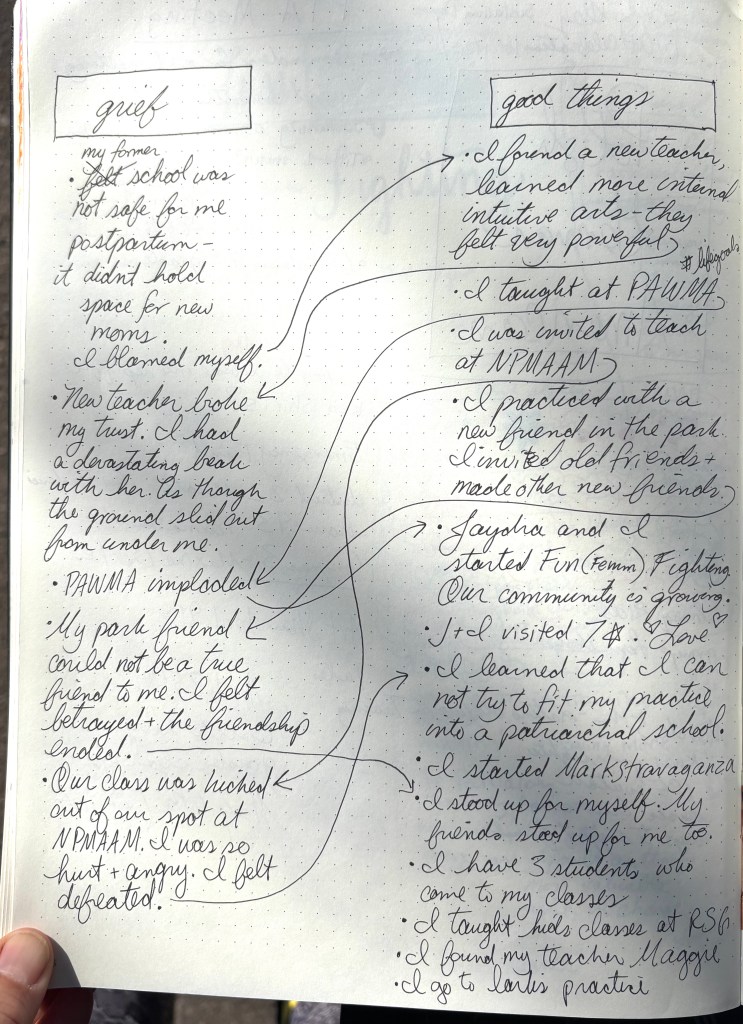
A couple weeks ago, with these things in mind, I wrote a mental map of the “good” and “bad” things that happened in my martial arts life in the last few years. The exercise helped–I could see how the good wove into the bad, and the bad led to the good. I could also see that there was more good than bad:
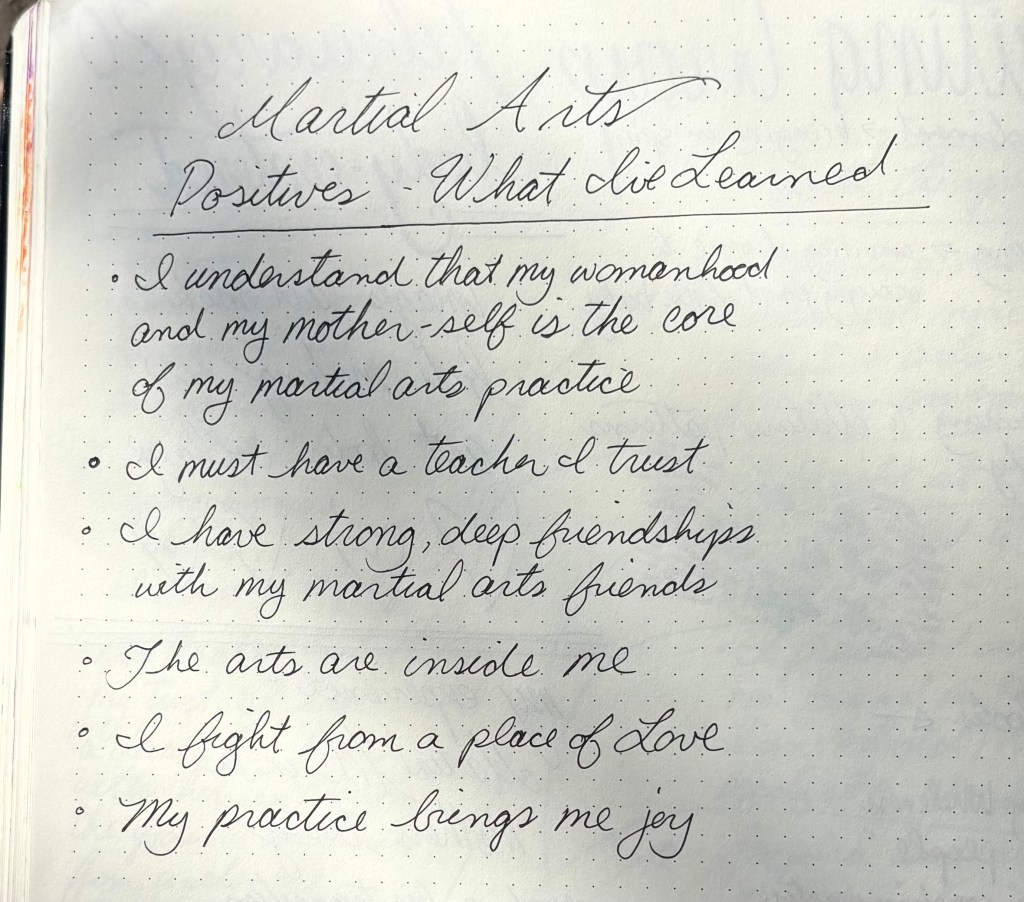
Then I distilled the lessons I learned through these hard times:
The distillation helped me get out of the problems circling in my head and start reconnecting to the deep “why” of my practice. A writing friend of mine reminded our writing group recently to be “rooted in something bigger than self.” This reminder was calming, and helped pull me back into my body and out of my swirling thoughts.
The bigger thing that I root into is the earth. It’s the felt sense of the body. It is connections with others, life, spirit, nature. I can allow myself to feel the emotional pain of these wounds, and I can allow myself to feel that pain for as long as I need to.
But, at the same time, as I root into the lessons I’m learning from those painful experiences, I can begin to move forward. Slowly, so slowly, I can move a little bit forward, out of the pain and into new possibilities. I can let the pain inform me so that I’m not inflicting the same pains on my students and practice partners. I can hold space for myself and let myself feel hurt if I need to.
But along with the pain, I can allow myself to feel the joys in my practice: laughing with a training partner, making a new discovery with a student, enjoying the warming weather in outside practice. I can hold space for pain and joy, and can move forward with more wisdom and compassion than I had before.
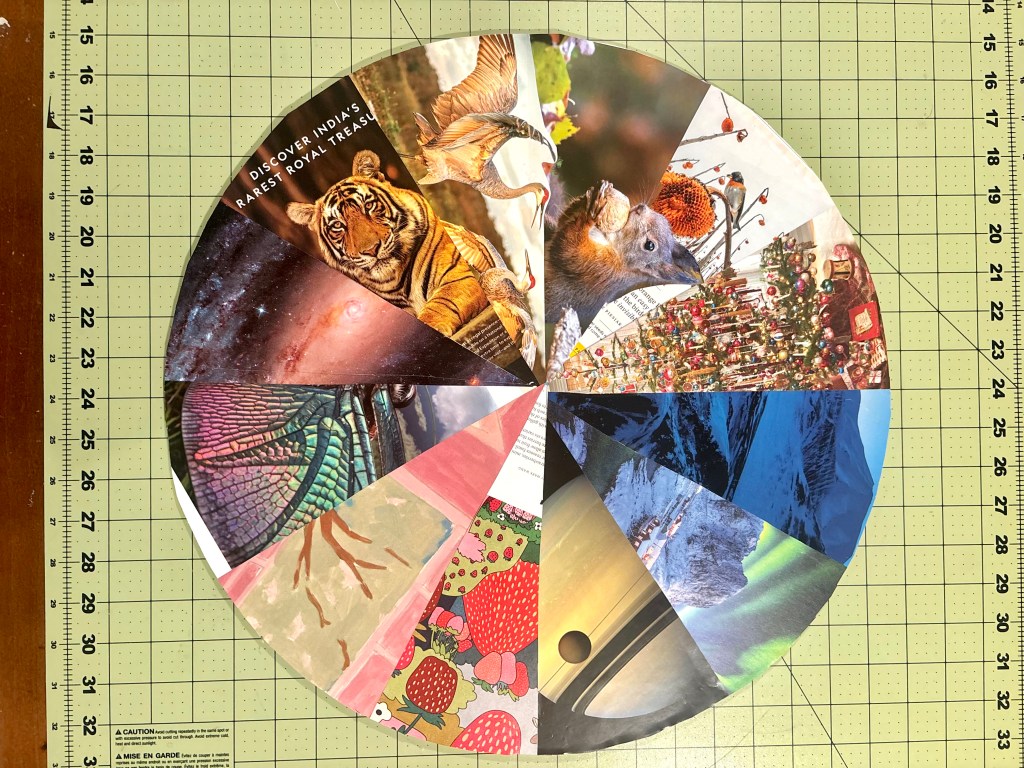
At the end of 2025, I invited my Women’s+ students to make circular calendars with me. I’ve had this project in mind for a few years, but I hadn’t actualized until this past December. My students and I held calendar-making class over two of our regular Sunday class times–this was the first time we had a craft class as part of Portland Martial Arts & Crafts.
I got the idea for the calendar after seeing pagan “wheel of the year” calendars in some of my witch books. Those calendars are pie-like circles that show the cross quarters as an X across the circle. The cross quarters mark the solstices and equinoxes, and divide the circle into four equal slices. Pagan holidays are marked around the edges of the circle, where the pie crust would be.
I wanted my calendar to be similar to those wheels, but to list the months, and perhaps include other holidays and occasions that were meaningful to me. I also wanted to be able to mount my calendar on the wall by putting a nail in the center, so I could then turn the calendar itself as the year progressed. The calendar wasn’t meant to list appointments or even individual days. It’s more a calendar of the seasons to keep me oriented within the year. I often feel like I’m operating a little behind schedule, and things sneak up on me. The circular calendar would let me see the whole year at once, so that I could know where I was and what was coming up.
Thinking up the project in my head was pretty easy, but actually creating it in real life presented unforseen challenges. I thought I would be able to make an even circle using a rudimentary compass made from a piece of string and a pencil, but that created wobbly results. I ended up using the biggest circular object I could find (my kids’ sit n’ spin toy) and tracing a circle onto large foam core sheets.
Once my students and I traced our circles, we cut them with X-acto knives and found our circle’s center points. Then we used a triangle and ruler to mark 12 months and the 4 cross quarters (which do not line up evenly with the months!) Once we had our lines marked out, we started adding artwork to our calendars.
I knew going into the project that we would use collage as the primary art form for our calendars, so the next phase of the project involved sitting and going through magazines to find good pictures. I had forgotten how much I LOVE going through magazines for collage material, and going through magazines with my students was joyful and relaxing. Working with our hands left our voices free to talk, so we had good visiting time while we created together.
We talked about how the circle calendars reflect our daoyin and internal arts practice. In our class we talk about how the shift in seasons affects us and how the energy of the seasons changes throughout the year. Our internal arts practice is rooted in Tai Chi philosophy and Taoism, and one of my students pointed out that the calendars could track the yin and yang shifts of the seasons. Winter is maximum yin time–internal, cold, resting. Summer is maximum yang time– external, hot, active. The circle calendars reflected and supported our practice on many levels.
Despite having two class periods to finish our calendars, I still haven’t quite finished mine. The image above shows the work I completed in December, but since then I’ve added month names and more images. Always more images! I’ve added pictures of seasonal flowers and animals.
I love my calendar so far, and I’ll post another picture of the more completed version soon.
A few weeks ago as I was leading my martial arts class in a local park, one of my students said to me, “I just saw a friend walk by and I know he’s going to ask me later what I was doing here. I’m not sure what I should tell him. What are we learning here? What is this class called?”
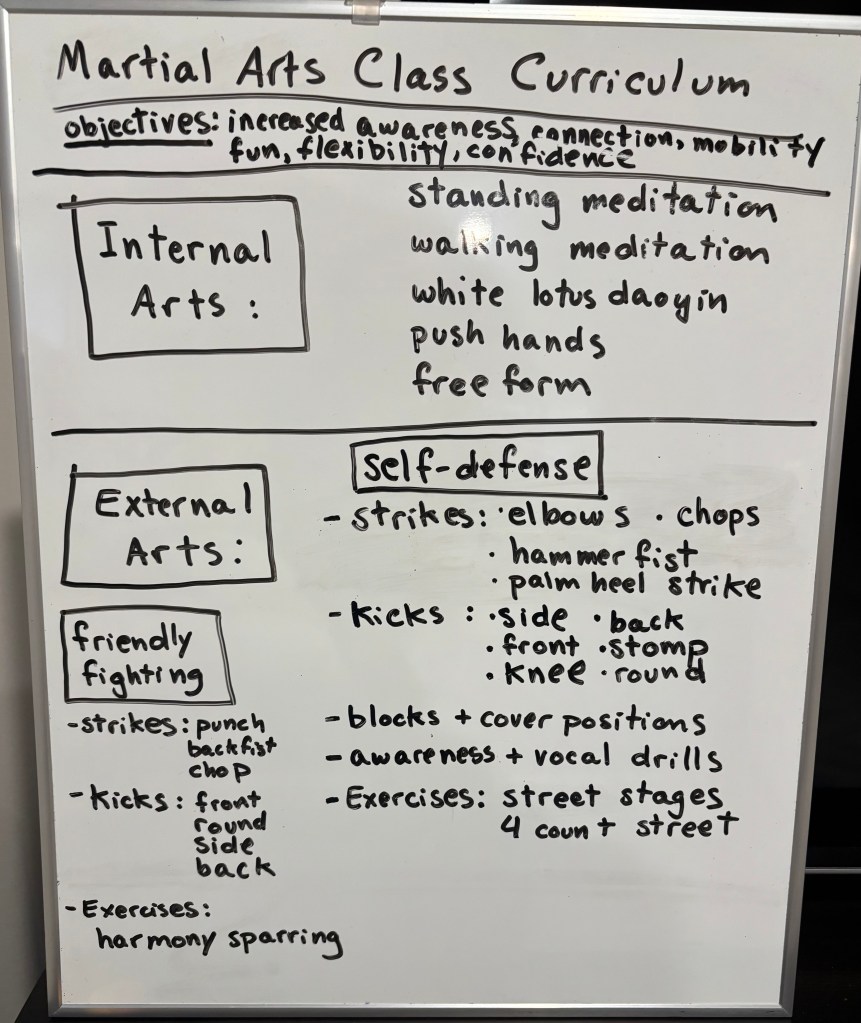
Her question shocked and delighted me–she had been in my class for months and after all that time she was asking me what the class actually was. She asked for words that described what we were doing. I stammered for an answer. “Umm, well, it’s called Women’s+ Martial Arts, and we’re learning martial arts, but not in a traditional sense. We’re training some internal arts, but also some external. And some self-defense… I think you should tell your friend it’s a martial arts movement class.” I felt pretty good about my answer, but didn’t feel like it was entirely complete. I told her after class that I appreciated her question and would continue to think on it. I told her I would also start writing out our curriculum so we could all get a clearer sense of what we were learning.
My big takeaway, though, was that I needed to answer a simple, foundational question for myself and my students: What are we doing here?
I’ve been thinking about my answer ever since, and I have been thinking about how important her question was. Clarifying what we are learning and why is an important task for a teacher who wants to have good communication with her students.
I started by writing out a rough curriculum of what we practice in class:
Writing this out also helped me notice my goals for our class. In my younger days, my goals as a martial artist were much different than they are now. Back then I wanted to be tough and strong. I wanted to be a formidable fighter, win at tournaments, and get my black belt. But I also wanted to be part of a martial arts community in which we were doing internal work to become our best selves. I felt like I had all of those things for a while in my Mo Duk Pai days, but after having a baby, everything changed.
I had worked so hard to become tough and strong, but after having my son, my body was stretchy and weak. I couldn’t train as hard as I used to, but my training partners still hit me as hard as they had before. They hit me too hard, and unfortunately the culture in the school was such that I didn’t feel safe speaking up and telling my fellow students to go easier on me. That would’ve been showing too much weakness. And so, because I was afraid of getting seriously injured in training, I left Mo Duk Pai.
When I returned to martial arts with a new teacher a few years later, I started noticing how toxic and subtly sexist the culture had been in my old school. I realized that I no longer wanted to buy in to the notion of trying to be the toughest kitty in the class. I wanted to move my body joyfully and be healthy and injury-free.
My goals for my students now are informed by these past experiences. Most of all, I want my students to feel their own embodiment. I want them to notice the messages their bodies are sending them, and I want them to practice listening to their own selves. I want them to be confident and strong, but I want their strength to come from sensitivity and awareness, not toughness. I want them to know themselves well, and to have the courage to speak their own truths. I also want us to have a joyful, vibrant community based on respect and our shared personal growth.
The moves we practice are all vehicles for working on these deeper issues. Our internal arts practices allow for deep listening inside of ourselves, while our external practices help us in setting and maintaining healthy boundaries. We practice moving martially to defend ourselves, but also to keep our bodies flexible and agile as we age.
So, the core of what I teach is embodiment, mindfulness, and standing up for ourselves. In this sense, martial arts is simply the context for working on a deeper connection with ourselves and each other.