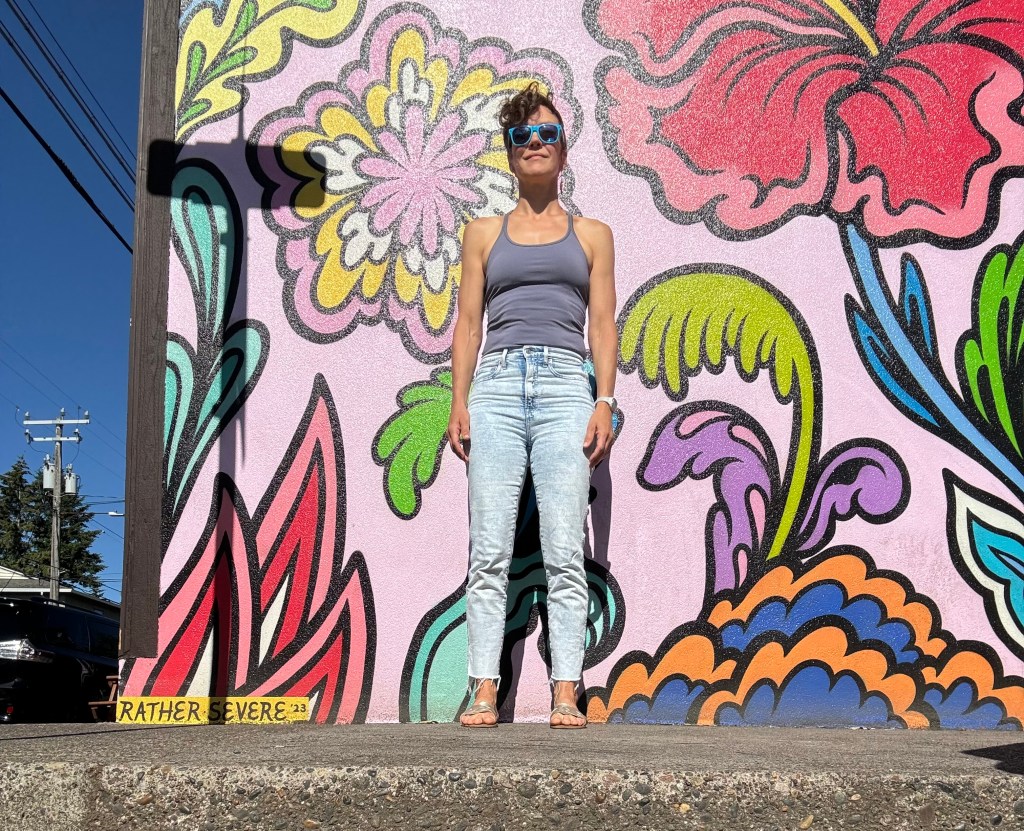
Wuji standing meditation is the foundation of the martial arts and healing system I teach. “Standing is everything,” my teacher Sana will say, over and over. When we stand we aim to release tension in the body and connect deeply with the earth. Being in tension limits our possible movements– if the arm is full of tension, it can’t punch quickly and efficiently. When we can allow for the release of that tension, not only in the arm but in the entire body, we can open up to the possibility of seemingly effortless, multidirectional, flowing movement.
But before we move, we stand. In standing we’re listening for our cleanest, clearest, alignment between heaven and earth. The depth of our connection with the earth relates directly to how much energy we can allow to flow through us, and therefore how much power we can issue in our martial movement. Standing position is quite specific, so I’d like to list some of the fundamental ways we are aiming to position our bodies in Wuji standing.
Here we go! Feel free to give it a try as you read:
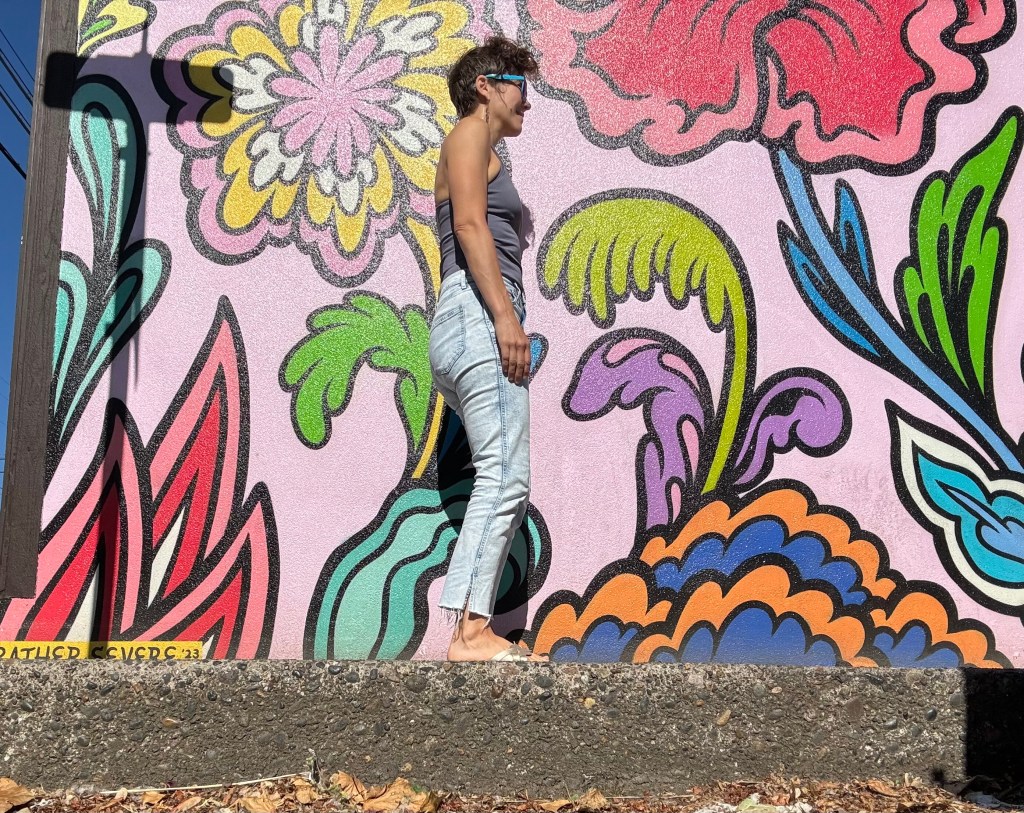
• Bring awareness to the lower dantian, the energetic center below the navel and deep in the body. By allowing our awareness to rest here instead of in our head, we begin the journey of felt embodiment. Standing is all about feeling and allowing, not thinking and doing.
• Feet are hip-width apart and parallel, toes pointed forward, weight even on the feet.
• Ankles are opening in all directions.
• Knees aren’t locked: have soft energy and awareness at the backs of the knees.
• Hips are “sitting in,” as though there’s a little bicycle seat right behind you that you’re sitting on. The lower back opens and the front of the belly closes. The hip flexors open. This “sitting in” position allows for the body to connect deeply into the legs, the feet, the earth.
• We allow the kidney area to be full. This can be the most elusive aspect of standing for newbies– I know it was for me. Before I started practicing standing, I didn’t even realize my back could be full or empty. I knew my stomach could go in and out, but not my back. This is where practicing with a partner can be very helpful. Your partner can place their hand on your back, over your kidneys, and invite your back to meet their hand. Listening for how to fill the kidneys can take some time, but it will make all the difference in the connection between the upper and lower body.
• The sternum rests in to the pelvis. That is, we don’t want the chest up and out, we want it softly rested in and down.
• Arms are resting loosely at the sides of the body. We can change the arm position in standing, but having the arms loose is a nice place to start.
• The chin is rested in to the heart, not jutting out. The throat is soft.
• We imagine the goddess Quan Yin is above us in heaven and is holding a golden thread that attaches to the bai hui point on top of our head. We imagine that our skeleton is dangling from this thread.
• We are listening behind, attending to the space behind us. Often we are so focused on on what is in front of us, what is ahead of us, that we are pulled out of ourselves and into the action. The focus of standing meditation is to be fully present in ourselves and in the present moment. Listening behind increases our awareness in the present.
• Eyes are gazing at the horizon–we allow the horizon to come to us.
• A soft smile is on the face. We allow ourselves to enjoy standing.
How we stand determines how we experience life. Are we leaning forward eagerly when we stand? Are we pulling back and away? Do we shift our weight nervously? Are we trying to appear in control, in charge? Are we in our heads and not even aware of how we’re standing?
When we stand still we can listen in to the messages our bodies are sharing with us. Where are our emotions living in our body? Where are we holding tension? Where are we out of balance? When we can bring awareness to our tension and imbalances, we can begin the journey of letting go of them.
In standing we aim to increase awareness, expand consciousness, and rest into presence. We can practice standing for long stretches at the park or for brief moments in line at the grocery store. We can take what we learn in standing directly into our everyday lives and into our relationships with others. What a nice practice to have in our embodiment and self-awareness toolkit.



 Michelle Folk Johnson